Component Lifecycle
Insights on electronic component sourcing, market trends, and supply-chain best practices.


Obsolete elektronische Bauteile beschaffen: Leitfaden für Einkäufer 2026
Wenn ein Hersteller ein Bauteil abkündigt, beginnt für Einkäufer ein Wettlauf gegen die Zeit: Die Restbestände im Markt sind endlich, die P…

NRND Explained: What Not Recommended for New Designs Means for Buyers
NRND means "not recommended for new designs". The part is still in production and you can still buy it, but the manufacturer is telling you not to design it in…

Electronic Component Shelf Life: How Old a Date Code Is Too Old?
Electronic components do not expire. What ages in storage is not the silicon, it is the solderability of the leads and, on a small number of families, the inte…
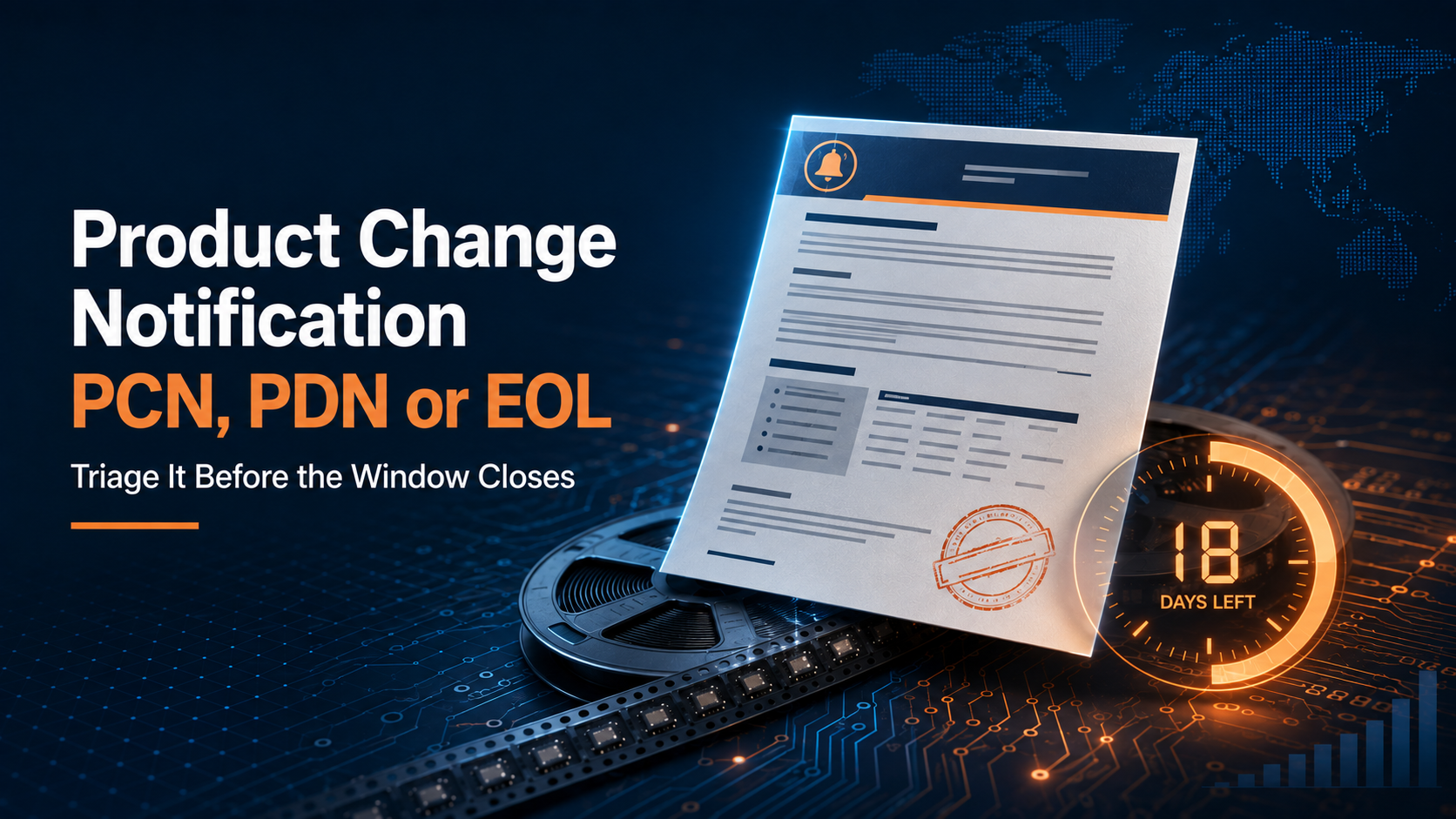
Product Change Notification (PCN): How to Triage a PCN, PDN or EOL Notice
A product change notification (PCN) is a manufacturer's formal warning that something about a part you already designed in is about to change. Under J-STD-046,…

Who Buys Excess Electronic Components? How to Vet a Buyer and Get a Fair Price
Excess electronic components are bought by four types of buyer: independent distributors, brokers, online marketplaces, and scrap recyclers. They pay very diff…
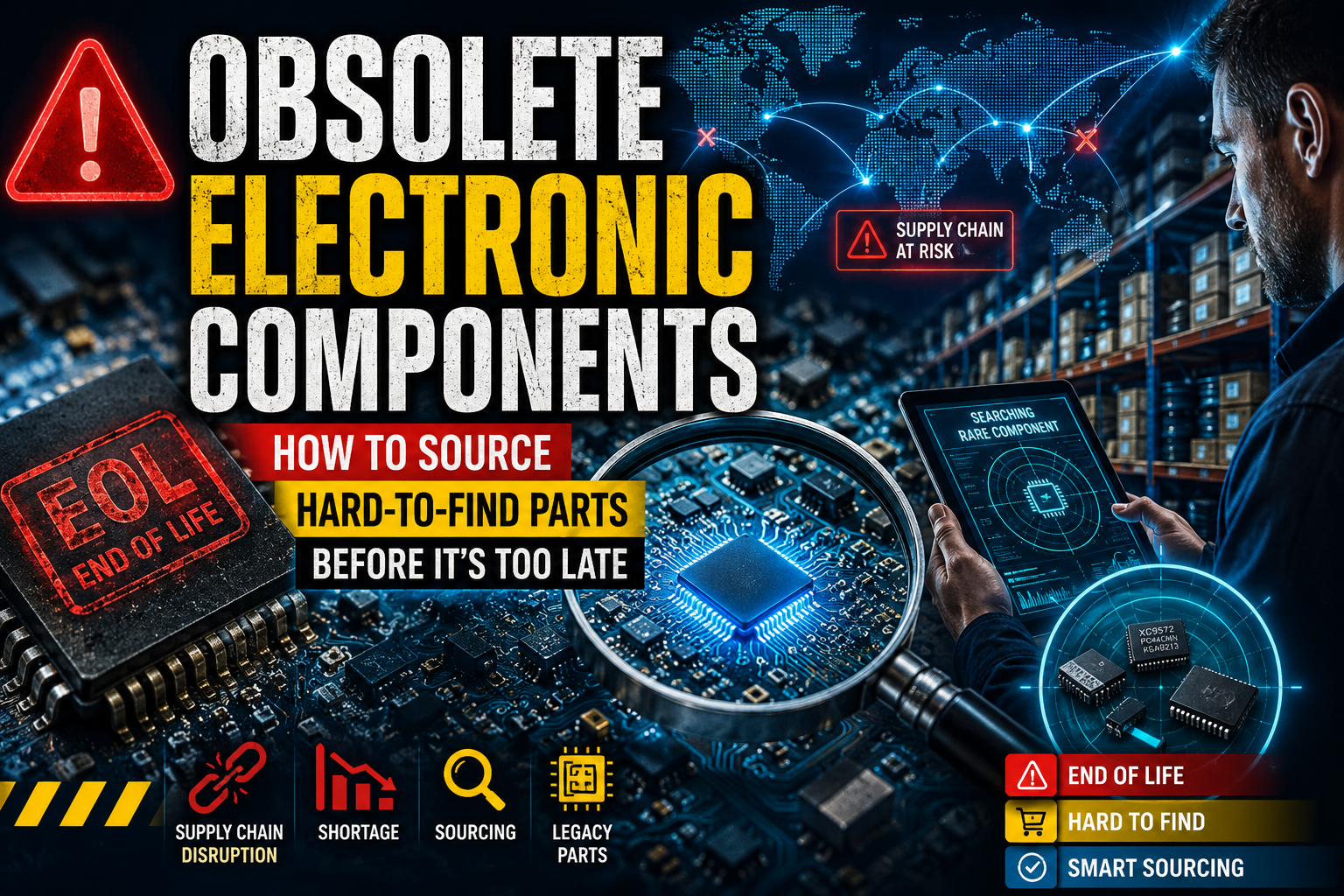
How to Source Obsolete Electronic Components in 2026
Obsolete electronic components are parts a manufacturer has discontinued and no longer produces, yet thousands of active designs still depend on them. When a p…